7 Warning Signs You Need a Switchboard Upgrade
Your switchboard is the heart of your home's electrical system. It distributes power to every circuit, protects against overloads, and—when working properly—keeps your family safe from electrical hazards.
But many Melbourne homes still have switchboards from the 1970s, 80s, or 90s that weren't designed for modern electrical demands. Air conditioners, EV chargers, induction cooktops, and the dozens of devices we now plug in daily can overwhelm an aging switchboard.
At Power Amp Electrical, we upgrade switchboards across Western Melbourne and Geelong every week. Here are the seven warning signs we see most often—and what to do about them.
1. You Still Have Ceramic Fuses
This is the biggest red flag.
If your switchboard has ceramic fuse holders with replaceable wire fuses, it's seriously outdated. These fuse boxes were standard until the 1980s but have several critical problems:
- No safety switches (RCDs): Ceramic fuse boards don't protect against electric shock
- Fire risk: Incorrect fuse wire can allow dangerous overloads
- Inconvenience: Fuses blow and need replacement vs. circuit breakers that simply reset
- Insurance issues: Some insurers won't cover homes with ceramic fuses
Verdict: Ceramic fuses should be replaced immediately. This isn't optional—it's a safety imperative.
2. Your Safety Switches Keep Tripping
Safety switches (RCDs) are designed to trip when they detect a fault—that's their job. But if your safety switches trip frequently, it indicates:
- A faulty appliance on the circuit
- Moisture in an outlet or junction box
- Deteriorating wiring insulation
- An overloaded circuit
- The safety switch itself may be faulty
What to do: Don't just keep resetting it. A licensed electrician should investigate the cause. Sometimes the solution is as simple as replacing a faulty appliance; other times, wiring repairs or a switchboard upgrade is needed.
Read more: Electrical Safety Tips for Melbourne Homes
3. Lights Flicker When Appliances Turn On
Do your lights dim or flicker when the air conditioner kicks in, or when you turn on the microwave? This is called "voltage drop" and indicates:
- Overloaded circuits: Too many high-draw appliances on one circuit
- Undersized wiring: Older homes often have wiring that can't handle modern loads
- Loose connections: At the switchboard or elsewhere in the circuit
- Undersized main supply: Your home's electricity supply may be insufficient
Occasional, minor dimming isn't unusual. But noticeable flickering—especially with multiple appliances—needs investigation.
4. You Don't Have Enough Circuits
Modern homes need more circuits than homes built 20-30 years ago. If you're experiencing:
- Power boards daisy-chained together
- Extension cords as permanent solutions
- Circuits that trip when you run multiple appliances
- No dedicated circuits for high-draw appliances (ovens, air con, etc.)
...your switchboard likely doesn't have enough circuits to safely distribute your electrical load.
A switchboard upgrade allows us to add dedicated circuits for:
- Air conditioning units
- EV chargers
- Kitchen appliances
- Home offices
- Outdoor areas
5. Your Switchboard Has Signs of Damage
Visually inspect your switchboard (with the cover on—never open it yourself). Warning signs include:
- Burn marks or discolouration: Indicates overheating
- Burning smell: Serious issue requiring immediate attention
- Buzzing or crackling sounds: Loose connections or arcing
- Rust or corrosion: Moisture damage
- Melted plastic: Severe overheating
- Scorch marks on the wall: Heat escaping the enclosure
If you notice any of these signs, call an electrician immediately. Turn off the main switch if it's safe to do so.
6. Your Home Was Built Before 2000
Electrical standards have changed significantly over the past 25 years. Homes built before 2000 often have:
- No safety switches on all circuits: Current standards require RCDs on all circuits
- Insufficient circuits: Not designed for modern appliance loads
- Outdated wiring: May not meet current standards
- Asbestos backing boards: Common in switchboards from the 1970s-80s
Even if your switchboard "works fine," it may not provide the protection required by current Australian electrical standards (AS/NZS 3000).
7. You're Planning Renovations or Additions
If you're adding:
- A new room or extension
- Air conditioning
- An EV charger
- A home office with significant equipment
- Outdoor lighting or power
- A pool or spa
...it's often the perfect time to upgrade your switchboard. Renovations typically require electrical compliance, and your existing switchboard may not have capacity for new circuits.
Pro tip: Upgrade during renovations when walls are open. It's cheaper and less disruptive than doing it later.
What Does a Switchboard Upgrade Involve?
The Process
- Assessment: We inspect your current switchboard, wiring, and electrical needs
- Quote: Detailed written quote with all work itemised
- Power disconnection: We coordinate with your electricity distributor
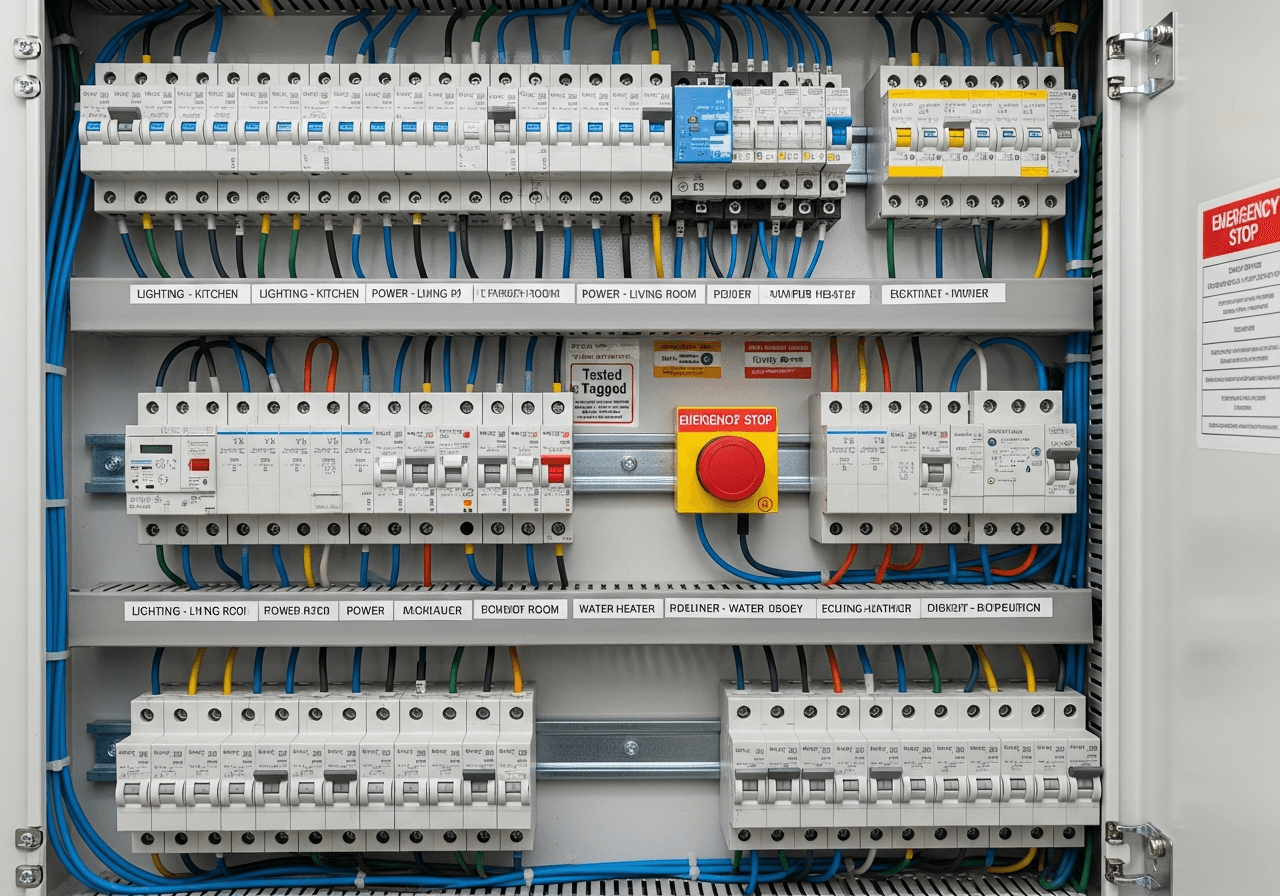
- Installation: Replace the switchboard enclosure and all components
- Testing: Comprehensive testing of all circuits
- Certification: Certificate of Electrical Safety issued
What's Included
A modern switchboard upgrade typically includes:
- New switchboard enclosure (larger capacity)
- Main switch
- Circuit breakers for all circuits
- Safety switches (RCDs) on all circuits
- Surge protection (recommended)
- Circuit labeling
- Compliance with current Australian Standards
Timeframe
Most residential switchboard upgrades are completed in one day. Power is typically off for 4-6 hours during the changeover.
How Much Does a Switchboard Upgrade Cost?
| Upgrade Type | Typical Cost |
|---|---|
| Basic upgrade (like-for-like replacement) | $1,500-2,000 |
| Standard upgrade (additional circuits) | $2,000-3,000 |
| Full upgrade with rewiring | $3,000-5,000+ |
| Asbestos removal (if present) | Add $500-1,000 |
Costs vary based on:
- Size and age of existing switchboard
- Number of circuits required
- Accessibility
- Whether asbestos is present
- Additional work (e.g., new circuits, meter upgrades)
Frequently Asked Questions
Is a switchboard upgrade mandatory?
Not unless you're selling, renovating, or your current switchboard is unsafe. However, we strongly recommend upgrading switchboards with ceramic fuses or those lacking safety switches.
Will I lose power during the upgrade?
Yes, typically for 4-6 hours. We can work around your schedule and will give you advance notice.
Do I need council approval?
No. Switchboard upgrades don't require planning permits. However, we do issue a Certificate of Electrical Safety.
Can I upgrade just part of my switchboard?
Sometimes. We can add safety switches to existing switchboards in some cases. However, if the switchboard is very old or at capacity, a full upgrade is usually more cost-effective.
Will a new switchboard increase my home's value?
It can help. A modern, compliant switchboard is attractive to buyers and removes a potential negotiation point during sale.
Flexible Payment Options
Upgrading your switchboard is an investment in safety. Power Amp Electrical offers interest-free finance through Brighte for eligible customers.
- 0% interest payment plans
- Terms from 6 months to 5 years
- Quick online approval
- No deposit required
A $2,500 upgrade could be just $48/week over 12 months.
Book Your Switchboard Assessment
Not sure if your switchboard needs upgrading? We offer free assessments across Western Melbourne and Geelong.
During the assessment, we'll:
- Inspect your current switchboard
- Check for safety switches and their coverage
- Assess capacity for your current and future needs
- Identify any immediate safety concerns
- Provide a written quote if work is required
Book your free assessment:
📞 Call Josh on 0473 344 634
Power Amp Electrical is a licensed electrical contractor (REC-34500) serving Western Melbourne and Geelong. All switchboard upgrades comply with AS/NZS 3000 and include Certificates of Electrical Safety.